
Historians and the wider public often view the Jacobite rising of 1715–16 as commencing in northern Scotland with a Highland revolt, when John Erskine, 6th earl and later 1st Jacobite duke of Mar, publicly proclaimed King James VIII and III as the lawful sovereign at Kirkmichael and then raised the royal standard at Braemar on 6 September 1715.1 This interpretation, however, obscures the broader scope of Jacobite mobilisation elsewhere in Scotland before Mar’s declaration, as an elaborate plan to secure a swift victory was already in motion before this critical juncture: the capture of Edinburgh Castle. Nearly equal numbers of Highland and Lowland Jacobites, about eighty men, along with officers, launched the first armed confrontation of the rising by attacking the city’s citadel.2
As Daniel Szechi underlines, the castle was the ‘symbolic heart of government power in Scotland’.3 Its planned seizure represented far more than the loss of a strategic fortress; a Jacobite takeover of the citadel would have dealt a severe blow to Hanoverian authority, demonstrating the vulnerability of both the post-union regime in Scotland and the British state more generally. Capturing the castle would also have given the Jacobites valuable military and financial resources and served as a potent symbol around which further support for the exiled Stuarts could have coalesced. Had the attempt succeeded, this episode would likely not be regarded as a mere prelude to the rising but as one of its pivotal moments.
The ‘Castle plot’ of 1715 was an outlandish yet amateurish scheme orchestrated by Scottish Jacobites, which scholarship discussed herein typically regards as a flawed, poorly organised attempt that briefly appears in broader narratives of the rising and exemplifies its improvised nature. By examining the episode, this article argues that the conspiracy reveals both significant networks of political opposition in Scotland following the Hanoverian succession of 1714 and the breadth of Jacobite support. The scheme was the first in Scotland since the Highland War ended in 1691 to involve a physical attack, signalling a shift in Jacobite tactics as forces coalesced for what became the rising of 1715–16. The effort highlights a persistent urban Jacobite network and a broader web across Scotland beyond its traditional Highland and north-eastern enclaves. The failure of this often-overlooked Jacobite plot notably shaped the outcome of the rising and markedly affected the lives of most of the principal conspirators. The article not only illustrates the reach of Jacobitism through its ideological and confessional diversity among both patrician and plebeian families but also its ability to attract support within the British military establishment. In doing so, this study highlights a facet of Scottish Jacobitism that has received less attention than elite political allegiance or Episcopalian dissent. The assault on Edinburgh Castle is therefore more important than commonly recognised, offering valuable insights into the composition, motivations and ambitions of the Scottish Jacobite movement.
The failed attack received some attention in the early twentieth century, particularly from Bayley Balfour and K. A. Moody-Stuart, who studied individuals directly and indirectly associated with the plot: Dr William Arthur and Lieutenant-Colonel James Steuart.4 More recent studies of the rising offer only brief accounts of the conspiracy, likely because it was swiftly uncovered and suppressed.5 Yet the 1715 attempt to storm the fortress was not merely, as Szechi suggests, a hastily assembled local initiative, but a noteworthy event within a series of Jacobite intrigues in Scotland leading up to that insurrection.6 As will be shown, this scheme also shaped many aspects of the Jacobite ‘cause’ in subsequent decades. The Castle plot therefore warrants re-evaluation in light of renewed historiographical interest in the 1715–16 rising, as well as Jacobite networks at home and abroad, including links to the Stuart court in exile.7
The Jacobite occupation of the strategically vital Edinburgh Castle became a recurring theme from 1689 to 1715, as various efforts were made to capture it during both attempted and actual major conflicts.8 Amid the revolution of 1688–9, George Gordon, 1st duke of Gordon, a staunch supporter of King James VII and II, held the fortress for the exiled monarch from December 1688 until June 1689. It is debatable whether Gordon, who was already the governor of Edinburgh Castle and refused to surrender it to the Williamite regime—an action within his rights—was occupying or ‘seizing’ it. One could argue that by not relinquishing the castle, especially after the Convention of the Estates proclaimed King William II and III and Queen Mary II as co-monarchs in Scotland on 11 April 1689, Gordon was, in effect, thereafter ‘seizing’ it. Some might even contend that he ‘seized’ the fortress in December 1688 to prevent the Williamites from taking control at the onset of the revolution, thus making this act the first Jacobite ‘capture’ of Edinburgh Castle.9
Early Scottish Jacobite conspiracies persisted throughout the 1690s, most notably the Montgomery plot of 1689–90, led by Sir James Montgomery of Skelmorlie. Although distinct, this scheme was part of the wider Jacobite opposition to the Williamite regime, which culminated in later conspiracies such as the English Assassination plot of 1696.10 It was not until the 1707 Union—an event that sparked the most major constitutional grievances in Scotland since the revolution—that the Jacobite party sought to preserve Scottish independence and restore the exiled Stuarts. During this period, a local Jacobite physician and anti-union agitator, Dr Smith, devised a concerted plan to seize Edinburgh Castle, emphasising its strategic importance and setting a precedent for future attempts when he later engaged with the plotters of 1715. He served at the fortress as a surgeon to Gordon when the duke held it in 1689.11 The persistence of Jacobite networks, exemplified by the career of Smith, demonstrates that events separated by many years and different political contexts remained connected through personal ties and political loyalties. This group continued exchanging ideas and plans as acts of conspiracy and rebellion evolved into a broader tradition of opposition to the Scottish post-revolution settlement.
Historians such as Szechi, Bruce Lenman and Murray Pittock generally view Jacobite plots as part of a wider culture of intrigue, often emphasising later episodes, including the English Atterbury plot of 1720–3 and the military campaigns of 1715–16, 1719 and 1745–6.12 These scholars, as noted and likely because of its swift suppression, have treated the Castle plot as more anecdotal or symptomatic of Jacobite amateurism. This article shows it was rooted in identifiable political and personal grievances rather than simply another manifestation of endemic Jacobite conspiracy. The first section reconstructs the circumstances behind the attempted seizure of Edinburgh Castle and the grievances that prompted it. The second examines the government’s readiness for an assault and why it failed. The third analyses the threat posed by the attack and the repercussions for the principal plotters. The article concludes by evaluating the significance of this episode for understanding Jacobite strategy and political culture during the 1715–16 rising, arguing that the Castle plot was not merely an isolated act of opportunism but a striking example of how local grievances shaped Jacobite actions, which in turn shaped the broader Jacobite movement.
I
The Castle plot did not emerge in a vacuum; as shown, it was connected to earlier Jacobite conspiracies. Another example was the Borlum plot of 1713–14, named after William Mackintosh of Borlum, which was more of a proposal and a failed precursor to the rising and the subsequent attempt on the fortress. Several Scottish Jacobite lairds, including James Drummond, Jacobite marquess of Drummond, later styled 5th earl and 2nd Jacobite duke of Perth; John Campbell, 1st earl of Breadalbane; and John Cameron, later 18th chief of Clan Cameron, sent a delegation led by Borlum to the exiled Stuart court to persuade James VIII and III and his French allies to make an immediate landing in Scotland. They also aimed to garner support from the English Tory party, especially Robert Harley, 1st earl of Oxford, Chancellor of the Exchequer and Lord High Treasurer, who was secretly communicating with the Jacobite claimant, hedging his bets. After these negotiations failed and Queen Anne died on 1 August 1714, the plans unravelled. King Louis XIV of France had, meanwhile, forbidden James from leaving French-controlled territory to invade Britain following the Peace of Utrecht (1713–15).13 As the plot lost momentum, the British government was not required to respond directly.14
The death of Anne presented a tangible opportunity for the Jacobites, as fierce opposition to the accession of King George I continued to intensify, especially in Scotland. The Hanoverian succession reignited long-standing political, religious, economic and cultural grievances. Although conspiracies were a constant feature of Jacobite intrigue, the Castle plot stemmed from a specific grievance arising from this event. The union also remained unpopular among many Scots for various reasons, including economic disruption, and numerous Episcopalians resented the ongoing dominance of the Presbyterian Kirk. The passage of the Toleration Act of 1712 strengthened Episcopalian resolve by protecting their worship, raising hopes among many that the ecclesiastical settlement of the revolution in Scotland might be overturned.15 The arrival of the Hanoverian dynasty dashed these hopes and only heightened the climate of discontent from which the insurrection of 1715–16 broke out.
Not all Jacobites shared these Episcopalian concerns. While dissatisfaction among Episcopalians created a conducive environment for Jacobite activity after 1714, the Presbyterian background of the principal plotters—Dr William Arthur, a fellow of the Royal College of Physicians, and his younger brother Thomas Arthur, a former lieutenant of the Scots Fusilier Guards who had guarded Edinburgh Castle as a garrison officer—raises broader questions about the diversity of Jacobite allegiance.16 Following the physician’s death in 1716, the earl of Mar remarked on the physician’s religion when informing the Jacobite agent Captain Henry Straton of that event. Mar said, ‘I hear, declared he [William] was a Presbyterian, but a loyal one, as he called it, which he thought was not at all inconsistent. You know what was his kind of loyalty. Pray are many of your Presbyterians of his opinion?’17
The earl’s comments highlight the unusual link between the Arthurs and the broader Jacobite movement, which in Scotland was often associated with Episcopalian networks and grievances. Historians such as Mark Goldie, Clare Jackson and Paul Monod have increasingly acknowledged the existence of ‘Whiggish Jacobitism’, in which support for the exiled Stuarts was not necessarily tied to Episcopalian or non-juring beliefs. These individuals favoured a Stuart restoration within strict parliamentary and constitutional limits on their power.18 In post-1714 Scotland especially, Jacobite backing from figures like the Arthurs probably reflects both ongoing political disillusionment and contingent opportunism. These elements align with Szechi’s model of Jacobite motives. Rather than being considered ‘die-hards’, however, the Arthur siblings could be described as ‘new Jacobites’.19 Loyalty based solely on confessional grounds is possible, but other, more temporal factors—such as opposition to the union, the preference for the dynastic legitimacy of the Catholic Stuarts over the newly installed Lutheran Hanoverian dynasty, economic grievances, local political rivalries and tactical rather than ideological Jacobite allegiance—are more plausible.
Whatever the Arthurs’ motivations and against the backdrop of the broader tensions underlined, a diverse group of Jacobites devised a plan to escalade the walls of Edinburgh Castle using specially lengthened rope ladders, aiming to secure it for James VIII and III’s hoped-for landing in Scotland.20 Two detailed Jacobite accounts describe the scheme to seize the fortress: one from the former Tory MP and army officer John Sinclair, master of Sinclair, and the other from William Arthur, who later left a deathbed defence of his actions to Mar.21 Less detailed accounts also exist, chiefly those of Charles Andrews, Peter Rae, Sir George Warrender, 1st baronet of Lochend and provost of Edinburgh, and Sir John Clerk of Penicuik, later 2nd baronet.22
Sinclair was uncertain who initially proposed the scheme, while Arthur claimed he knew of it from the outset. Both, however, agreed that the idea emerged after Anne’s death. As Szechi has argued, leading English Tories strongly backed the broader plans for a Stuart restoration.23 While Mar appears to have pursued the plan to seize Edinburgh Castle upon his arrival in Scotland, it began as a more local initiative, shaped by conditions in the capital and the grievances of those directly involved. Due to the secretive nature of conspiracies, the origins and exact timeline of the plan remain ambiguous, and it may also have been part of the broader Borlum plot. We know it was the physician, along with his brother, Ensign Thomas Arthur, ‘Mr Barns’ (probably James Cunningham of Barns, or Barnes), one Dr Montgomery and an individual known only as ‘Mr A’, who formulated the final scheme in Edinburgh.24 William Arthur confirmed that although modifications to the castle forced the conspirators to alter their original plan, ‘the design had long been afoot’.25
The physician’s retrospective account indicates that scaling the castle walls was not the conspirators’ original design. He recalled that the modifications to the fortress’s security arrangements, especially limiting the number of civilian visitors to three at any one time through the principal gate, prevented the probable Jacobite tactic of having an insider secretly admit several plotters to overwhelm the sentries. This change forced the plotters to abandon their initial scheme and adopt a far riskier plan: escalading the western rock face, opening the West Sally Port, allowing the larger Jacobite force below to enter and then seizing the garrison along with the castle’s supplies and utilities.26
The castle defences had been routinely upgraded, particularly during heightened periods of Jacobite insurrection. In 1708, the British government ordered David Leslie, 3rd earl of Leven and governor of Edinburgh Castle, to put the fortress into ‘such a posture of defence as time will allow’, including increasing the garrison from 120 to 200 men, while likely unaware of Dr Smith’s plan to take the castle for James VIII and III.27 Further modifications occurred in 1709. After the queen’s death in 1714 and the anticipated unrest over the Hanoverian succession, local authorities installed temporary defensive measures by keeping the garrison under arms, cutting the wooden bridge to create a functioning drawbridge and digging an entrenchment between the fortress and Castlehill as Jacobite plans continued to be formulated.28
The steady development of a plot to seize the castle enabled upper- and middle-class Jacobites with greater social influence to continue building a broader conspiracy, confident in widespread support from Edinburgh’s tavern society. According to Thomas Arthur, who had guarded the fortress as a castle garrison officer, several Edinburgh barbers and some of their associates had similarly considered attacking the fortress while drinking together.29 Such discussions had been ongoing for at least six months before the event, but, crucially, news of this conspiracy had not spread into Whig circles.30 Sinclair stated that some of these young men, who eagerly awaited the arrival of James, were ready to carry out the plan when called upon. Yet, as international politics and the worsening health of Louis XIV again delayed James’s departure from France, the plotters shifted their focus to refining their initial scheme by recruiting new participants from Edinburgh and its surrounding areas. This contingent included not only barbers but also apprentices, clerks, servants of advocates and others employed by government officials. Andrew Lumisden, private secretary to Prince Charles Edward Stuart, claimed in 1749 that his father, William, an Edinburgh law agent, was among the plotters.31 Jacobite sympathies were thus evident across various social classes; the febrile political context translated those sympathies into direct action.32
By August 1715, news of Mar’s journey north to rally the clans had spread widely, prompting the principal plotters to seek the earl’s approval, which they obtained. With full support from Mar, James Drummond took charge of overseeing the scheme and, once the fortress was in Jacobite hands, would have become governor of Edinburgh Castle.33 Drummond agreed that the Arthur brothers should lead the attack and co-ordinate ground operations. As events unfolded, they involved another key Edinburgh conspirator and opportunist: their cousin, Lieutenant James Arthur, whose religion is unknown, but who was presumably also Presbyterian, serving in Viscount Shannon’s regiment of foot. He was likely also passing as a Whig while secretly procuring deserters for the Jacobite cause. Treachery within this regiment was a serious concern. The city magistrates, for example, reported that a Captain Ronald, son of the late Duncan Ronald, Writer to the Signet and staunch Whig, was suspended along with other officers upon suspicion of disaffection to the government.34 At the same time, other regiments saw more officers desert to the Jacobite army than Shannon’s, including twenty-two Scottish officers from the British army, although none from that regiment during the rising.35 One officer did desert Shannon, but only in February 1716. This man was Captain Arthur Elphinstone, later 6th Lord Balmerino and 5th Lord Cupar, who was executed in 1746 for his role in the Jacobite rising of 1745–6.36
The day after the attempt on the fortress, the press reported that William Arthur had assembled a small assault party of about forty ‘stout fellows, designed to be grenadiers, for the scaling of the Castle’ from various backgrounds in Edinburgh and nearby counties.37 The physician later confirmed that it was his cousin James who had gathered this band of ‘grenadiers’, a term meaning elite foot soldiers and, in this case, merely well-armed Jacobites, alluding to a mini-conspiracy with the broader plot among the Arthur family.38 One especially noteworthy recruit to Drummond’s network was Charles Forbes, son of the laird of Brux. In 1713, he secretly visited France with Borlum, where he met James FitzJames, 1st duke of Berwick and elder half-brother of James VIII and III, alongside Jean-Baptiste Colbert de Torcy, marquis de Torcy, the French minister of foreign affairs. The Borlum plot thus demonstrates the international scope and reach of the Jacobite network and its associated intrigues at that time.39
Drummond also dispatched Alexander MacGregor Drummond, 4th laird of Balhaldie and 17th chief of Clan Gregor, to gather forty Highlanders from the Atholl estates and send them via different routes to Edinburgh. Balhaldie was to lead the attack once there, after meeting up with Arthur’s men.40 According to Mar and William Arthur, Drummond remained in Perthshire, where he raised further clansmen, tenants and followers from among the Atholl-men while preparing them for the impending campaign.41 The Jacobite leadership promised each man £100 sterling and an army commission upon the successful capture of the castle.42 This group of eighty to ninety conspirators, organised by Drummond and his immediate subordinates, matters because it illustrates how local discontent could quickly transform into a broader, nationally recruited movement.
This number likewise underscores the presence and effectiveness of a co-ordinated Jacobite communication network that connected the Highlands to Edinburgh and surrounding Lowland counties during this crucial period when government surveillance had significantly increased. Recruiting men to storm the castle from outside was, however, insufficient. Thomas Arthur’s primary role was to make the necessary arrangements from within the fortress, leveraging his reputation and influence, as Margaret Sankey highlights, to bribe and cajole his way into the confidence of several sentries and guards.43 Six months before the attack, he had secured the attachment of Sergeant William Ainslie and Privates James Thomson and John Holland, all serving in Colonel George Preston’s Regiment of Foot. All three were members of the garrison companies defending the castle.44
The combined presence of the Arthur brothers, Barns and Montgomery was required to secure the full commitment of Ainslie.45 A clandestine meeting took place in a secluded Edinburgh alehouse beneath the aptly named sign suum cuique (to each his own). The physician recounted that Ainslie, accompanied by his cousin, known only as Blackhall, a laird from Kelso, stated that he had recommended Thomson and Holland, whom Thomas engaged, and that he would take no payment, calling himself a gentleman. Ainslie later contradicted William Arthur by confessing under court martial that he had, in fact, accepted nine guineas as payment and had given one each to Thomson and Holland as thanks for their assistance. Thomas Arthur’s offer of nine guineas, along with the promise of a further 100 and a Jacobite lieutenancy if successful, seemingly made Ainslie agree cheerfully.46
What is even more intriguing is William mentioning John Holland as the son of ‘Old Holland’. This evidence suggests that John successfully passed himself off as a Whig, despite his father being a known Jacobite. The elder Holland was the plotter tasked with delivering a message to Mar about the attempt, but his full identity remains unknown. Thomas also promised Thomson eight guineas, Holland another four and both even better rewards if they succeeded.47 From this information, we could infer that covert Jacobite activities and corruption permeated the ranks of government loyalists. It also raises further questions about the extent of a Jacobite presence in the British army, especially regarding Thomas and James Arthur, as well as John Holland. They may have believed that Anne might restore her younger half-brother, James, before her death, and continued their service under the new Hanoverian regime while covertly plotting against it.
The notion of infiltration and efforts to persuade those loyal to George I to join the Jacobite cause did not cease with sentinels inside the castle or soldiers in various regiments. The character of Scottish elite society, including the decision-makers involved in such endeavours and its ideological divisions, played a significant role in both the attempt on Edinburgh Castle and the broader rising. Jacobite, Tory and Whig sociability, hospitality and general mingling, as Szechi highlights, were part of the normal rhythm of daily life. Political differences even crossed family and marital lines at every echelon.48 This aspect is particularly noteworthy in the weeks leading up to the attack.
The Arthur brothers moved in high social circles. William later noted that he had visited prominent Whigs in the days prior to the attempt, including dining with Lord Justice Clerk Adam Cockburn of Ormiston, smoking a pipe at his club with Major James Aikman of Preston’s Regiment, a government agent, likely in an effort to secure his involvement, as his brother Thomas had done with Ainslie, Thomson and Holland.49 The elder Arthur also dined on the evening before the attack with his wife Barbara’s brother, John Clerk, baron of the exchequer from 1710; William mentioned that both he and his wife were her sibling’s ‘greatest favourites’.50
The physician added that these men had recently secured him the position of professor of Botany and Materia Medica for North Britain, as well as the post of Regius Keeper at the Royal Botanic Garden, a role for which he had no prior expertise or experience.51 The king had to approve his appointment. Arthur nonetheless claimed the right to define the scope of his commission and, most remarkably, his control over it exempted him from taking the oath of abjuration, as updated by the Toleration Act of 1712. This exception suggests that his academic knowledge, scientific reputation, or, more likely, his influential patronage granted him special favour from the royal or government, allowing him to bypass traditional political and religious loyalty tests.52 Although many Presbyterians refused to take the oath, the majority remained loyal to the Hanoverian dynasty; within these refusals, therefore, lay a smokescreen by which a small number with Jacobite sympathies might have concealed their true allegiance.53 The physician’s marriage into a prominent Whig/Presbyterian family is particularly striking in this context. Rather than displacing William’s Jacobite sympathies, his marriage demonstrates the extent to which his political allegiance could co-exist with close personal ties to those who stood on the opposite side of the political divide.
William also reported that, while ultimately deciding to seek aid from their cousin James, Thomas consulted several prominent Whigs and Tories on the advice of Jacobite intermediaries, Captain Straton and Mr Barns. It is alleged that Thomas spoke with David Carnegie, 4th earl of Northesk, the earl of Leven and William Gordon, Lord Haddo, later 2nd earl of Aberdeen.54 It remains unclear why the younger Arthur would do so, but several possibilities likely existed. His visits may have been a form of social justification, claiming the plotters had their imprimatur to lend legitimacy to those whom he and his associates had already persuaded to convert or desert to the cause. They otherwise served as a cautious cover to ensure the plan proceeded smoothly. William also remarked that his brother had met with Lieutenant Lindsay of the castle garrison and of Preston’s regiment at the Caledonian Coffeehouse on the day of the attack to ‘make things well with the Whigs’.55 This meeting suggests that Thomas was plausibly double-dealing, either wishing to rejoin the army if the plan failed, or trying to conceal the conspiracy by checking at the last possible moment with a highly relevant individual to ensure the plan could proceed safely. Regardless of his intentions, Thomas Arthur had influence and a solid military reputation even among leading patricians. His activities offer another compelling example of how Jacobites, Tories and Whigs operated within political and martial circles, even amid swirling rumours of potential plots and insurrections.56
After Thomas returned from a meeting and confirmed the final plan with Drummond on the morning of 8 September 1715, the principal plotters in Edinburgh planned to carry out the attack at precisely 11 pm that evening.57 The Highland and Lowland Jacobite storming parties assembled at the city’s West Kirk, beneath the castle walls, at 9 pm after sunset, armed with pistols and swords.58 William Arthur reported that he and his brother had again consulted the opaque Dr Smith about plans to escalade the castle.59 Yet Smith was annoyed that they had neglected his ‘secret’—likely his 1707 infiltration-style design through the principal gate that he described to them—and proceeded with their backup plan to escalade the castle walls. The siblings could not persuade him to assist further. William also explained that, from his house in the Calton area, another plotter, Mr Skeen, had aided Charles Forbes in constructing the ladders, but they had proved six feet too short in the final endeavour.60 Another issue was the proclivity of some eighteen Jacobite youths to drink excessively with Forbes and to celebrate their triumph prematurely in an Edinburgh tavern near the castle in the hours before the attempt, which caused him to arrive late and inadvertently help derail the plan.61
Major-General George Wade later demonstrated the vulnerability of the position in 1727, when he ordered four soldiers to climb the rocks and enter the castle without ladders or specialist equipment. Although intended as a comment on the need for improved fortifications, the episode also highlights the unnecessary complexity and amateurishness that characterised operations against the fortress in 1715. Wade claimed that his ‘experiment proved that the walls could be scaled in 5 minutes’.62 As we will see, however, several reasons explain why the 1715 attempt failed.
II
The prize of Edinburgh Castle, as Sankey explains, was highly significant and presented a twofold temptation for those seeking to take it. The heavily fortified stronghold contained £80,000 sterling in gold, the remainder of the Equivalent, awarded to Scotland under the terms of the 1707 Union.63 This enormous sum would have provided a substantial contribution to the Jacobite war chest and supply chain for the anticipated campaign; the castle, likewise, would also have served as a secure base of operations (see Figure 1).64
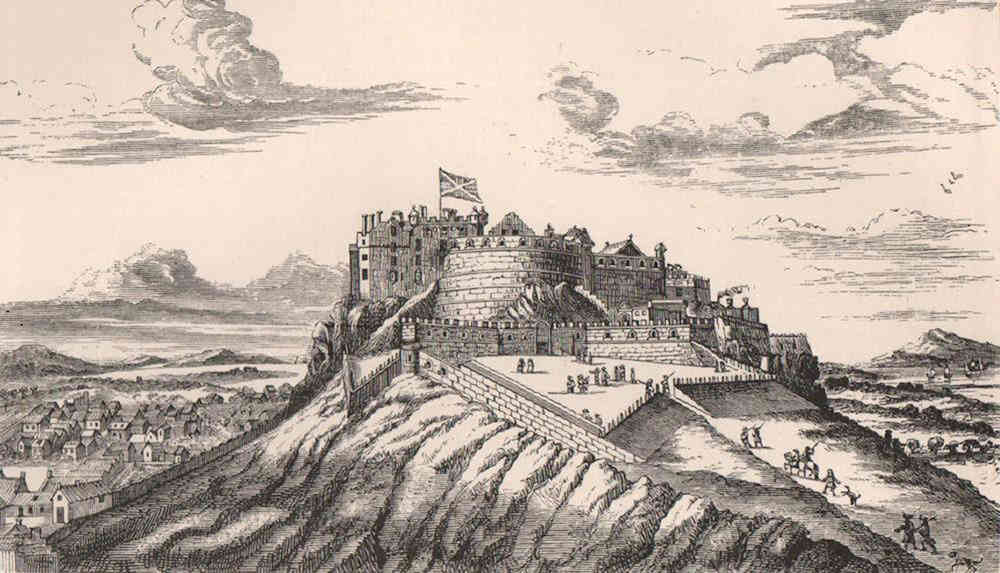
Figure 1: ‘Edinburgh Castle in 1715, from the North-East’, by an unknown artist, n.d.74
The Hanoverian regime recognised the growing threat of insurrection as a serious concern. As both sides hurried to advance their positions and increase their chances of success, the government had succeeded in infiltrating Jacobite intelligence networks. Most of the information uncovered laid the groundwork for effective resistance against both a large-scale rising and any specific plot that might have emerged.65 The local authorities had therefore been actively pre-empting a potential conspiracy in the strategically important capital.
In May 1715, further recommendations for the castle defences were ordered by the recently appointed governor of Edinburgh Castle, General George Hamilton, 1st earl of Orkney, probably in anticipation of another rising. These defences included a new, narrower sally port near the entrance and the scarping of the rock, both inside and outside, to make any escalade more difficult. As Moody-Stuart explains, the necessity of this last measure is clear in light of events three months later.66 In July, George Warrender, the lord provost of Edinburgh, and James Graham, 1st duke of Montrose, separately informed the Edinburgh city magistrates that the king had received specific intelligence of a planned invasion by the Pretender.67 Preparations also advanced across Scotland, as Warrender reported the raising of ‘13 or 14’ regiments of dragoons and seven regiments of foot.68 Over the following weeks, magistrates and the lord provost oversaw heightened security in and around Edinburgh. Yet Warrender complained that there were too few of the king’s standing forces stationed there to protect the city adequately.69 Lieutenant-Colonel James Steuart, deputy governor of the Castle, received instructions to place its garrison in the best possible condition, which he increased by three officers and forty-six other ranks, and to maintain constant vigilance.70
At the same time, the government arrested known Jacobite plotters who intended to help lead the impending rising, including Alexander Home, 7th earl of Home, John Fleming, 6th earl of Wigtown, and George Lockhart of Carnwath, and incarcerated them in the fortress.71 Despite the arrest of several key Jacobite patricians, their subordinates remained undeterred. Even with all the government’s defensive measures in place, there was still a viable chance to seize the castle.72 Notwithstanding his notable vantage point and connections, William Arthur claimed he had never seen any evidence that the government thought such a plot could possibly succeed, having taken all those defensive measures, which gave him and his co-conspirators the opportunity to catch them off guard.73
Contemporary accounts of the attack and the movements of the main players are generally consistent.75 When the small Jacobite force, principally organised by William, finally launched the assault, a crucial factor that thwarted Jacobite hopes of taking the castle was an anonymous alert to the Edinburgh authorities. Plots are inherently prone to betrayal; as a minority faction, the Jacobites often found themselves in a disadvantaged, even precarious, position. Rumours about who revealed the conspiracy were plentiful, and it remains unclear whether one or more individuals informed the authorities. Sankey notes that several witnesses who had heard the young, drunken Jacobites discussing the plot may have leaked this information.76 The most common account is that the turncoat was among the conspirators, as Clerk confirmed, and that Cockburn of Ormiston received a message from a woman, usually identified as the wife of William and the sister of Clerk, Barbara Arthur, as the attack commenced.77 As Balfour has shown, the physician’s wife might have been a Jacobite. Her husband may even have converted her to the cause. Thomas’s wife, who also knew about the plot but had more convincing Whig credentials at that point, was therefore the more likely informant.78
Regardless of who divulged the plan, Ormiston took the message seriously. He and Warrender immediately ordered a curfew and alerted the city magistrates and Lieutenant-Colonel Steuart.79 Major James Aikman, mentioned earlier, swiftly responded by commanding a patrol of Whig volunteers to sweep beneath the castle walls after the sentinels raised the alarm upon discovering the scheme had failed, and that the Jacobites had fled. This patrol eventually apprehended four plotters: Captain Allan Maclean, a veteran officer from the 1689 campaign led by John Graham of Claverhouse, 1st viscount of Dundee, stumbling on the rocky ground; Alexander Ramsey and George Boswell, two Edinburgh writers; and one Lesley, who served as a page to the Catholic and staunch Jacobite Elizabeth Howard, duchess of Gordon.80
On 10 September, Warrender acknowledged the threat posed by the plot and the city’s vulnerabilities, and pleaded with James Stanhope and Charles Townshend, 2nd Viscount Townshend, secretaries of state for the southern and northern departments, to deploy regular forces to maintain government control. Warrender stated, ‘for hade not I given detachments of our city guaird on that immediat [sic] exigence and service the Conspirators hade been masters of the Castle and wee hade then been reduced to the extreemest danger’.81
Although the Arthur brothers kept preparing right up to the last moment and everything seemed ready for success, the Jacobites ultimately botched the attack.82 The scheme failed because its success depended on a carefully co-ordinated sequence of events over which the plotters had little control once the plan was set in motion. The design required complete secrecy, flawless synchronisation and uninterrupted surprise to breach the formidable natural and martial defences of Edinburgh Castle, none of which they achieved. This bungled attempt, therefore, not only affected the success of the rising but also had immediate and long-term consequences for the leading conspirators and the prospects of a Stuart restoration.
III
On the day of the attack, Ormiston informed Robert Pringle, the under-secretary of state for Scotland, that Mar’s decision to raise the standard was rash, unaware of the earl’s involvement in the scheme, which was not widely recognised at the time.83 While the attempt on the castle and the vulnerability of the state to attack were brief, it is noteworthy that the Jacobite leadership’s instinct to achieve such a feat could plausibly have altered the course of the campaign. A seized fortress could have served as a rallying point for the disaffected, and Mar intended to move his troops south and take control of the city if successful.84 As the duke of Berwick later recalled, doing so would have made Mar master of all Scotland.85 Further indicating the strategic importance of taking the city, a hastily organised second attack on Edinburgh Castle intended for the end of September was thwarted by Archibald Campbell, earl of Ilay and later 3rd duke of Argyll.86 Ormiston’s intuition, however, proved correct, and the attempted seizure of the fortress sparked a chain reaction that ultimately led to Jacobite failure. Yet the repercussions of the failed effort extended far beyond the greater catastrophe of the disastrous rising.
The state acted against those it had captured and conducted searches with limited success. The four detained Jacobites, along with Privates James Thomson and John Holland, who had been apprehended on suspicion of involvement, soon thereafter gave statements to the city magistrates, implicating themselves, Sergeant William Ainslie and Dr William Arthur. Demonstrating the pivotal role of public opinion, rumours that a ‘great’ and sympathetic Edinburgh mob planned to set fire to the city’s Tolbooth, where the prisoners were held, forced the local authorities to remove them to the nearby castle. Although proving guilt would have been difficult in these circumstances, the state pardoned the captured plotters but prosecuted Thomson, Holland and Ainslie for high treason.87 The distinction between civilians and soldiers is significant, especially since only military personnel were prosecuted in connection with this treasonous Jacobite incident. While remaining loyal to the government, Lieutenant-Colonel Steuart, who came from a family with Jacobite sympathies, was mistrusted by both sides and was also briefly imprisoned by a furious Ormiston for several days in late September before his release.88 This selectivity served an important political purpose, reflecting the Hanoverian regime’s post-rising preference for broader clemency through measured justice and exemplary punishment rather than indiscriminate vengeance.89
In late 1716, as the government tried and executed Jacobites in England through commissions of Oyer and Terminer, military authorities in Scotland court-martialled Thomson and Holland. In December of that year, as the English authorities convened at Carlisle, the Scottish authorities sentenced these men to flogging and discharge from service. Ainslie, having refused to declare his involvement, became the principal target of the state’s ire over the Castle plot. He was also court-martialled but sentenced to death by hanging, and special gallows were erected to ‘showcase’ his treason. On 24 December 1716, Ainslie was hanged over the castle wall at the West Sally Port and said nothing during his execution.90 An unforgiving populace believed his avarice outweighed his lack of political loyalty on either side and therefore felt little sympathy for him.91 This sergeant was the only individual executed in Scotland for Jacobite-related treason, which further illustrates the government’s broader clemency policy and restrained stance on post-rising retribution, in which exemplary capital punishment was limited to a small number of offenders.92
The execution of Ainslie reflected the anger of both Edinburgh and Westminster authorities and the perceived threat from the attempt on the castle, which Szechi describes as causing ‘a frisson of fear through the Jacobites’ enemies’.93 When dealing with Thomson, Holland and Ainslie, the government was particularly incensed by the aid the Jacobites received inside the castle from individuals supposed to be loyal to the Crown. This assistance undermined state authority, and the entire episode caused considerable embarrassment. These combined factors led to Ainslie’s humiliating method of execution, which served as a symbolic warning to others. The anonymously authored Faithful Register asserts that his gibbet was left for two weeks, but Moody-Stuart reports that it remained standing ten years later.94
The conspirators’ fortunes also fluctuated, depending on broader events and personal circumstances. While the state pardoned some Jacobites and they resumed normal lives, others among the plotters saw their futures irrevocably altered. The international Jacobite network and Stuart court continued to provide refuge, employment and even advancement to some of the principal plotters. After the scheme failed, James Drummond commanded the Jacobite cavalry at the battle of Sheriffmuir on 13 November 1715. He departed Scotland with James VIII and III and the earl of Mar in February 1716, before joining the exiled court in both Avignon and Rome. He died in Paris on 6 April 1720.95
Little to no news about the activities of William Arthur surfaced from late 1715 to late 1716. We can only glean some details about his whereabouts from his close friend, another Jacobite physician and agent in exile, Dr Roger Kenyon. He informed Mar about Arthur’s unexpected demise, which occurred around October 1716, and provided the earl with his deceased comrade’s deathbed account of the attempt on Edinburgh Castle. Kenyon commented that if God had permitted him more time, Mar would have received another account of what Arthur observed at the battle of Preston, 9–14 November 1715, after the physician fled across the border with the aid of some family and Jacobite friends.96 Robert Patten, chaplain to the Jacobite forces in Northumberland who later turned King’s evidence, similarly recounted that both William and his associate Barns had met Mar more than once, probably at Perth, following the failed attempt on the fortress and were later present at Preston.97
The physician subsequently travelled to Italy, where, as Kenyon stated, he died ‘after escaping a thousand dangers in the King’s cause’.98 While the Stuart court remained in Avignon, James VIII and III obtained papal approval to bury his Protestant supporters in Rome. William Arthur became the first Scot and Jacobite to be laid to rest in the new Protestant cemetery near the Pyramid of Cestius. His burial set a precedent for interring Protestant Jacobites from the three kingdoms in the papal city, illustrating the impact of failing to capture Edinburgh Castle and the permanent exile of various plotters within the broader Jacobite context.99 By 1750, more than a dozen Protestant courtiers had been buried beside the pyramid, which also became the final resting place for Grand Tourists, artists and authors such as Sir James Macdonald, 8th baronet of Sleat, known as the ‘Scottish Marcellus’, in 1766.100
The failed attempt on Edinburgh Castle did not significantly damage Thomas Arthur’s reputation to the point of losing favour and fellowship among both the exiled Stuarts and his Jacobite comrades. On 4 February 1716, hours before departing for France, the Jacobite claimant promoted the younger Arthur to the rank of major and commissioned him to serve in the regiment commanded by James Drummond. Some confusion over his whereabouts suggests he either returned to Scotland in late 1716 or had remained there the entire time, but by July that year we know Thomas was at the Stuart court in Avignon.101 William Gordon, another Jacobite agent in Paris, reported that he was glad Major Arthur had written, as friends were concerned that both he and his brother had perished. Gordon was unaware that William Arthur was already dead.102 Mar confirmed that Thomas had also fallen gravely ill and was near death while close to the Firth of Forth.103 The younger Arthur initially remained on the list of those to stay in France or Flanders, and at some point before December 1717, James VIII and III was paying him a pension.104 Thomas, like his elder brother before him, eventually made his way to the papal city after the Stuart court relocated there.105 In 1723, James promoted him to Lieutenant-Colonel.106 From 1726, Thomas resided in the Piazza di Spagna and continued to attend the Jacobite claimant, ultimately entering the exiled Stuarts’ direct service. By about 1740, he had been appointed a Gentleman of the Chamber.107 Thomas died two years later, on 20 August, having converted to Catholicism.108
Charles Forbes also became attached to the Stuart court. Yet his botched aid during the attempt on Edinburgh Castle, along with his subsequent obdurate behaviour and constant scheming, earned him a reputation as a complex individual.109 Forbes initially spent time in Holland and France; by December 1717, James VIII and III was providing him with a pension.110 In 1719, after failing to gain meaningful favour with Mar, he stayed in Rome from 1720 to 1725 with his wife and children and continued to receive financial support.111 Forbes’s troublesome behaviour eventually led him to fall out of favour; in January 1726, James commanded him to leave Rome.112 The disgraced Jacobite then departed for France. Some months later, Lewis Innes, Rector of the Scots College in Paris, notably remarked, ‘A very fowll mouth’d gentleman arrived here of late from Rome’ and there were ‘too many that give ear to him’.113 Forbes died sometime after mid-1731, making this attempt the last time he sought relief from the exiled Stuarts, but likely to no avail.114
We thus see a mixed pattern in the subsequent careers of the main conspirators, and Jacobite allegiance seldom brought consistent material rewards. While the exiled court lacked the resources of St James’s, the Stuarts nonetheless aimed to reward loyal service through patronage by granting military commissions, honours, pensions and continued favour. Some of the Castle plotters who fled to the continent, like Thomas Arthur, benefited from this largesse and maintained the Stuarts’ confidence, remaining in their service; others, like Forbes, fell afoul of their benevolence. The varied experiences of the plotters illustrate both the opportunities and limitations of this exiled patronage network and the lifelong personal costs of devotion to the cause.
IV
The Castle plot of 1715 had immediate, often brutal effects on participants like Sergeant Ainslie, and long-lasting impacts on its principal figures, while also shaping the course of the failed rising of 1715–16 and the broader Jacobite movement. This article shows that James VIII and III attracted support from all social classes across Scotland. Jacobitism was present within the British army, and some soldiers actively participated in the scheme. It further emphasises that urban ‘Edinburgh Jacobitism’, often overshadowed by Highland narratives, played a vital role in the conspiracy, alongside notable northern assistance. Protecting castles during the Jacobite risings was also vital to preventing a Stuart restoration. Although the main plotters devised a well-prepared plan, which Sir James Steuart, 1st baronet of Goodtrees and solicitor-general for Scotland, described as the ‘best laid project’, their attempt failed due to a combination of misfortune, betrayal, poor co-ordination and an overall amateurish operational execution.115 Their inability to seize the fortress meant Edinburgh remained under Hanoverian control; the Jacobites consequently lacked a strategic southern Scottish base to rally around.
The idea of persuading some elite Whigs and Tories to join the effort to take the castle is another noteworthy aspect of this event. It is also worth further exploring whether the Arthur brothers’ Presbyterian Jacobitism was an exception or indicative of a broader trend in political and religious support for the cause. The attempt on the castle also offers deeper insight into Jacobitism and Whiggism, illustrating how these ideologies could coexist even within elite families and emphasising the complex, sometimes divided loyalties that characterised endeavours to restore the exiled Stuarts, as well as the risks some were prepared to take to achieve that goal. A notable example is the earl of Orkney, who helped secure a reprieve for his nephew, Basil Hamilton of Baldoon. The younger man had been captured after the battle of Preston for serving in the Jacobite army.116
Reassessing the Castle plot demonstrates that we cannot understand Jacobite strategy at that time solely through a traditional Highland perspective, which dominates interpretations of the rising. Instead of being a peripheral episode within the earl of Mar’s broader campaign, the conspiracy reveals the importance of Edinburgh as a political and military urban centre where many could exploit the city’s institutional weaknesses and, crucially, capture its fortress before the Jacobite army was fully assembled. The attempt also set a precedent for similar strategies during the rising of 1745–6. Capturing castles, rather than simply surrounding cities or towns, was a proven military tactic necessary to secure complete victory. While later generations of Jacobites learnt from their predecessors’ techniques of besieging and blockading, Prince Charles’s forces failed to seize the castles of Edinburgh in 1745 and Stirling in 1746, a failure that dealt a heavy blow to their prospects during the final insurrection and ultimately doomed the Jacobite cause.117
Notes
- ‘Intelligence from northern Scotland’, 8 September 1715, The National Archives (hereafter TNA), SP 54/8/30; Daniel Szechi, 1715: The Great Jacobite Rebellion (New Haven, CT, and London, 2006), 100. ⮭
- Charles Andrews, A Full and Authentick Narrative of the Intended Horrid Conspiracy, (London, 1715), 31. ⮭
- Szechi, 1715, 103. ⮭
- Bayley Balfour, ‘William Arthur, M. D., Botanist to the King in Scotland, 1715–1716’, Transactions of the Botanical Society of Edinburgh, 26 (1917), 375–404, https://doi.org/10.1080/03746601709469341; K. A. Moody-Stuart, ‘Lieutenant-Colonel James Steuart: a Jacobite Lieutenant-Governor of Edinburgh Castle’, Scottish Historical Review, 21 (1923), 1–25. ⮭
- Szechi, 1715, 102–4, 170, 204–5; Margaret Sankey, Jacobite Prisoners of the 1715 Rebellion: Preventing and Punishing Insurrection in Early Hanoverian Britain (Aldershot and Burlington, VT, 2005), 11–14, 99–100; Stuart Reid, Sheriffmuir 1715: The Jacobite War in Scotland (London, 2014), 35–7. ⮭
- Szechi, 1715, 103. ⮭
- See, for example, Jonathan Oates, The Last Battle on English Soil, Preston 1715 (Farnham and Burlington, VT, 2015), https://doi.org/10.4324/9781315556369; Kathleen Lyle, Afore the Highlands: The Jacobites in Perth 1715–16 (Perth, 2019); Rosalind Anderson, The Jacobite Rising of 1715 and the Murray Family (Barnsley, 2024). See also Calum Cunningham, Jérémy Filet and William Runacre (eds), The Apex of Jacobitism: Challenges, Cultures and Legacies of the 1715 Rising (Manchester, forthcoming 2027). ⮭
- For an overview of the various attempts on Edinburgh Castle throughout the seventeenth and eighteenth centuries, see David H. Caldwell, ‘Edinburgh Castle Under Siege 1639–1745’, Journal of the Sydney Society for Scottish History, 18 (2019), 1–24. ⮭
- B. L. H. Horn, ‘Gordon, George, first duke of Gordon (b. in or before 1649, d. 1716)’, Oxford Dictionary of National Biography (online edition, 2004), https://doi.org/10.1093/ref:odnb/11038 [hereafter ODNB; last accessed 15 July 2026]. ⮭
- Paul Hopkins, ‘Montgomery, Sir James, of Skelmorlie, fourth baronet (c. 1654–1694)’, ODNB, https://doi.org/10.1093/ref:odnb/19069 [last accessed 15 July 2026]; Daniel Szechi, The Jacobites: Britain and Europe, 1688–1788, second edition (Manchester, 2019), 99–100. ⮭
- Moody-Stuart, ‘A Jacobite Lieutenant-Governor’, 8. ⮭
- Szechi, Jacobites; Bruce Lenman, The Jacobite Risings in Britain 1689–1746 (London, 1980); Murray G. H. Pittock, Jacobitism (Basingstoke, 1998), passim, https://doi.org/10.1007/978-1-349-26908-2. ⮭
- Szechi, Jacobites, 99, 103–5; Jérémy Filet, The Jacobites and the Grand Tour: Educational Travel and Small States’ Diplomacy (Manchester, 2025), 97. The delegation, having arrived in France, initially proposed the idea in November 1713 and we know that Borlum was at Bar-le-Duc in the duchy of Lorraine with James in early 1714 before returning to Scotland to continue plotting a restoration. ⮭
- For the British state’s response to the Jacobite threat, see Calum Cunningham, Responding to the Jacobite threat: Policy, Law and Assimilation, 1688–1807 (Manchester, 2026), passim. ⮭
- Szechi, Jacobites, 121–2, 134–5. For 12 and 13 Will. III., c. 2, see John Raithby (ed.), The Statutes at Large, of England and of Great-Britain: from Magna Carta to the Union of the Kingdoms of Great Britain and Ireland, (20 vols, London, 1811), VI, 293–7. For 10 Ann., c. 7, see idem, VII, 275–80. ⮭
- Balfour, ‘Botanist to the King’, passim; Szechi, 1715, 102; Moody-Stuart, ‘A Jacobite Lieutenant-Governor’, 15. ⮭
- Mar to Straton, 15 November 1716, Royal Archives, Stuart Papers (hereafter RA, SP) 14/65. ⮭
- For discussion on ‘Whiggish Jacobitism’, see Mark Goldie and Clare Jackson, ‘Williamite Tyranny and the Whig Jacobites’, in Esther Mijers and David Onnekink (eds), Redefining William III: The Impact of the King-Stadholder in International Context (Farnham and Burlington, VT, 2007), 177–200; Paul Monod, ‘Jacobitism and Country Principles in the Reign of William III’, Historical Journal, 30 (1987), 289–310, https://doi.org/10.1017/S0018246X00021452. See also Szechi, Jacobites, 31, 110. ⮭
- Szechi, Jacobites, 24–36. ⮭
- Szechi, 1715, 102–3. ⮭
- John Sinclair, master of Sinclair, Memoirs of the Insurrection in Scotland in 1715. By John, Master of Sinclair. With Notes by Sir Walter Scott, Bart., eds David Laing and Thomas Macknight (Edinburgh, 1858), 29–31; Arthur to Mar, [1716], RA, SP 13/10. ⮭
- Andrews, Full and Authentick Narrative, 30–32; Peter Rae, The History of the Late Rebellion; Rais’d against His Majesty King George, by the Friends of the Popish Pretender (Dumfries, 1718), 198–200; Warrender to James Stanhope and Charles Townshend, 2nd Viscount Townshend, 10 September 1715, in William Kirk Dickson (ed.), Sir George Warrender, Warrender Letters (Edinburgh: Scottish History Society, 1935), 88–90; John M. Grey (ed.), Sir John Clerk of Penicuik, Memoirs of the Life of Sir John Clerk of Penicuik (Edinburgh, 1892), 94–5. ⮭
- Daniel Szechi (ed.), George Lockhart of Carnwath, Letters of George Lockhart of Carnwath (Edinburgh: Scottish History Society, 1989), xxix. ⮭
- Moody-Stuart, ‘A Jacobite Lieutenant-Governor’, 13, 24–5. The identity of Barns is challenging to ascertain fully. He was, as Robert Patten reported, most likely Cunningham of Barns, a close friend of the Arthur family; other accounts, however, suggest that he was George Seton of Barns, styled Jacobite Earl of Dunfermline. Montgomery was possibly related to Euphemia Montgomery, wife of the prominent agent Jacobite George Lockhart of Carnwath. Robert Patten, The History of the Late Rebellion, with Original Papers, and the Characters of the Principal Noblemen and Gentlemen Concern’d in it, 2nd edn (London, 1717), 51; Arthur to Mar, [1716], RA, SP 13/10; Balfour, ‘Botanist to the King’, 389; Sankey, Jacobite Prisoners, 11–12; Szechi (ed.), Letters of George Lockhart, xxix–xxx. ⮭
- Sinclair, Memoirs, 29; Arthur to Mar, [1716], RA, SP 13/10. ⮭
- Arthur to Mar, [1716], RA, SP 13/10; Moody-Stuart, ‘A Jacobite Lieutenant-Governor’, 14–15. ⮭
- Moody-Stuart, ‘A Jacobite Lieutenant-Governor’, 9. ⮭
- Ibid., 10–12. ⮭
- Arthur to Mar, [1716], RA, SP 13/10. ⮭
- Ibid. ⮭
- Andrew Lumisden to James Edgar, 13 December 1749, RA, SP 302/3. In 1745, King George II ordered William’s arrest and imprisonment in Edinburgh Castle, but he was later released on grounds of ill health. ⮭
- Sinclair, Memoirs, 29–30; Szechi, 1715, 105. ⮭
- Sinclair, Memoirs, 29; Andrews, Full and Authentick Narrative, 32. ⮭
- Arthur to Mar, [1716], RA, SP 13/10; City magistrates to Warrender, 5 August 1715, and to Henry Cunningham of Buchan, MP, 9 August 1715, in Dickson (ed.), Warrender Letters, 74–5. ⮭
- For a list of these men, see Jonathan Oates, Crucible of the Jacobite ’15: The Battle of Sheriffmuir 1715 (Warwick, 2017), appendix III, 261. ⮭
- A. Francis Steuart (ed.), Sir Archibald Steuart Denham, 6th baronet of Coltness, and baronet of Denham of Westshield, News Letters of 1715–16 (London and Edinburgh, 1910), 120. ⮭
- ‘Newsletters on the Jacobite Rebellion, giving details of events at Edinburgh, Stirling, Perth, etc.’, 31 August–13 September 1715, British Library, Add. MSS 38091, ff. 51v–52r. ⮭
- Arthur to Mar, [1716], RA, SP 13/10. ⮭
- Szechi, 1715, 80; idem, Jacobites, 103; Henrietta Tayler (ed.), The Jacobite Court at Rome in 1719. From Original Documents at Fettercairn House and at Windsor Castle (Edinburgh: Scottish History Society, 1938), 46. ⮭
- Sinclair, Memoirs, 29–30. ⮭
- Mar to Alasdair Dubh MacDonell, 11th chief of Glengarry, 11 September 1715, RA, SP 5/11; Arthur to Mar, [1716], RA, SP 13/10. ⮭
- Rae, History of the Late Rebellion, 200. ⮭
- Sankey, Jacobite Prisoners, 12. ⮭
- Sinclair, Memoirs, 29; Andrews, Full and Authentick Narrative, 32. Charles Andrews’s account of the attempt remarked that Thomas Arthur had also secured a fourth man, a corporal, promising him a promotion to ensign, perhaps in a Jacobite regiment. No other known source refers to this alleged recruitment. ⮭
- Arthur to Mar, [1716], RA, SP 13/10. ⮭
- Moody-Stuart, ‘A Jacobite Lieutenant-Governor’, 13; Sankey, Jacobite Prisoners, 12; Arthur to Mar, [1716], RA, SP 13/10. ⮭
- Arthur to Mar, [1716], RA, SP 13/10; Rae, History of the Late Rebellion, 200; Andrews, Full and Authentick Narrative, 32; Balfour, ‘Botanist to the King’, 389. ⮭
- Szechi, 1715, 105. ⮭
- Arthur to Mar, [1716], RA, SP 13/10. In August 1715, the Edinburgh authorities had dispatched Major Aikman to inspect volunteer forces in south-west Scotland in preparation for a Jacobite restoration attempt. Aikman was evidently back in Edinburgh by early September. Rae, History of the Late Rebellion, 204; J. E. Corrie, Records of the Corrie Family, A. D. 802–1899 (London, 1899), 213. ⮭
- Arthur to Mar, [1716], RA, SP 13/10. ⮭
- Ibid.; ‘Warrant of Royal Botanist’, 10 May 1715, TNA, SP 57/29/136; see also Balfour, ‘Botanist to the King’, 375–404. ⮭
- Arthur and these three prominent figures were all related by marriage: see Balfour, ‘Botanist to the King’, 397. ⮭
- Jeffrey Stephen, Defending the Revolution: The Church of Scotland 1689–1716 (London and New York, NY, 2016), 195. ⮭
- Arthur to Mar, [1716], RA, SP 13/10. ⮭
- Ibid. ⮭
- Ibid.; Balfour, ‘Botanist to the King’, 390. ⮭
- Andrews, Full and Authentick Narrative, 30; Moody-Stuart, ‘A Jacobite Lieutenant-Governor’, 17. ⮭
- Sinclair, Memoirs, 30; Warrender to Stanhope and Townshend, 10 September 1715, in Dickson (ed.), Warrender Letters, 89. ⮭
- For a list of Jacobites engaged in the plot, see Moody-Stuart, ‘A Jacobite Lieutenant-Governor’, 24–5. This list includes Alexander Murray of Stanhope, the eldest son of Sir David Murray, 2nd baronet of Stanhope. ⮭
- Arthur to Mar, [1716], RA, SP 13/10. The depiction of the attack on Edinburgh Castle, showing the Jacobites attempting to escalade the walls, is featured in an engraving by H. Terrason titled ‘Sheriffmuir 1715. March of the King’s Forces and cannon to Perth’. See SPL 51.21, National Galleries Scotland, https://www.nationalgalleries.org/art-and-artists/44983/sheriffmuir-1715-march-kings-forces-and-cannon-perth [last accessed 15 July 2026]. ⮭
- Colonel Charles Dubourgay to [Stanhope?], 9 September 1715, TNA, SP 54/8/33; Szechi, 1715, 102–3; Sankey, Jacobite Prisoners, 12. ⮭
- ‘Major-General Wade’s report’, 16 July 1727, TNA, SP 54/18/25a. For a plan of part of Edinburgh Castle from 1730 showing where the Jacobites attempted to escalade the walls in 1715 and Wade’s later modifications, see ‘Architectural Drawing of the West Defences of Edinburgh Castle’, c. 1730, National Records of Scotland, RHP35772. ⮭
- Moody-Stuart, ‘A Jacobite Lieutenant-Governor’, 14. ⮭
- Sankey, Jacobite Prisoners, 12. ⮭
- Szechi, 1715, 100. ⮭
- Moody-Stuart, ‘A Jacobite Lieutenant-Governor’, 12–13. ⮭
- Warrender and Montrose to the City Magistrates, 20 July 1715, in Dickson (ed.), Warrender Letters, 57–9. ⮭
- Warrender to the City Magistrates, 21 July 1715, in Dickson (ed.), Warrender Letters, 60. Rae highlighted preparations in Dumfries, Galloway, Nithsdale and Clydesdale. Other local magistrates reported similar activities in these areas, as well as Glasgow, Perth, Dundee, Aberdeen and Inverness. See Rae, History of the Late Rebellion, 204–5; Dickson (ed.), Warrender Letters, 66–82. ⮭
- Warrender to Stanhope, 23, 26 August 1715, in Dickson (ed.), Warrender Letters, 75–6, 79. ⮭
- Moody-Stuart, ‘A Jacobite Lieutenant-Governor’, 13. ⮭
- Sankey, Jacobite Prisoners, 11. ⮭
- Ibid. ⮭
- Arthur to Mar, [1716], RA, SP 13/10. ⮭
- Francis H. Groome (ed.), Ordnance Gazetteer of Scotland: a Survey of Scottish Topography, Statistical, Biographical, and Historical (6 vols, Edinburgh, 1885), I, 480. ⮭
- See those by Sinclair, Arthur, Andrews, Rae, Patten, Warrender and Baron Clerk. ⮭
- Sankey, Jacobite Prisoners, 12–13. ⮭
- Ormiston to Townshend, 10 September 1715, TNA, SP 54/8/37c; Szechi, 1715, 102; Balfour, ‘Botanist to the King’, 379, 382, 397. See also Clerk, Memoirs, 95. ⮭
- Balfour, ‘Botanist to the King’, 385–6, 390. ⮭
- Ormiston to Townshend, 10 September 1715, TNA, SP 54/8/37c; unknown to Robert Wodrow, 9 September 1715, National Library of Scotland (hereafter NLS), Wodrow Quarto X, ep. 10, cf. Szechi, 1715, 102–3; Sankey, Jacobite Prisoners, 13. For an account of the conspiracy and Steuart’s activity in defending the castle, see Moody-Stuart, ‘A Jacobite Lieutenant-Governor’, 13–24. ⮭
- Ormiston to Townshend, 10 September 1715, TNA, SP 54/8/37c; unknown to Wodrow, 10 September 1715, NLS, Wodrow Quarto X, ep. 11, cf. Szechi, 1715, 102–3; Sankey, Jacobite Prisoners, 13; Moody-Stuart, ‘A Jacobite Lieutenant-Governor’, 21. ⮭
- Warrender to Stanhope and Townshend, 10 September 1715, in Dickson (ed.), Warrender Letters, 89–90. ⮭
- Szechi, 1715, 103. ⮭
- Ormiston to Pringle, 8 September 1715, TNA, SP 54/8/29b. ⮭
- Balfour, ‘Botanist to the King’, 378. ⮭
- Moody-Stuart, ‘A Jacobite Lieutenant-Governor’, 23. ⮭
- Szechi, 1715, 170. ⮭
- ‘Declarations taken by the Lord Provost and Baillies of Edinburgh’, 9 September 1715, TNA, SP 54/8/36; Warrender to Stanhope and Townshend, 10 September 1715, in Dickson (ed.), Warrender Letters, 89; Moody-Stuart, ‘A Jacobite Lieutenant-Governor’, 23; Sankey, Jacobite Prisoners, 13–15. ⮭
- Moody-Stuart, ‘A Jacobite Lieutenant-Governor’, 23. ⮭
- Cunningham, Responding to the Jacobite Threat, 103–26. ⮭
- Ibid.; A Faithful Register of the Late Rebellion (London, 1718), 341–8, esp. 348; Steuart (ed.), News Letters, 152–4. William Arthur was also replaced as Royal Botanist in absentia. ⮭
- Faithful Register, 348; Stamford Mercury, 3 January 1716, 5; Sankey, Jacobite Prisoners, 14. See also William Ainslie, The Last Speech and Dying Words of Sgt. William Ainslie; The Lamentation and Last Farewell of Ainslie (Edinburgh, 1716). ⮭
- Cunningham, Responding to the Jacobite Threat, 98, 105. ⮭
- Szechi, 1715, 103. ⮭
- Anon., Faithful Register, 348; Moody-Stuart, ‘A Jacobite Lieutenant-Governor’, 23. ⮭
- J. G. Alger, revised by John Sibbald Gibson, ‘Drummond, James, styled fifth earl of Perth and Jacobite second duke of Perth (1674–1720)’, ODNB (online edition, 2006), https://doi.org/10.1093/ref:odnb/8071 [last accessed 15 July 2026]. ⮭
- Kenyon to Mar, 17 October 1716, RA, SP 13/9; Arthur to Mar, [1716], RA, SP 13/10. ⮭
- Patten, History of the Late Rebellion, 38; Balfour, ‘Botanist to the King’, 399. ⮭
- Kenyon to Mar, RA, SP 13/9. It remains unknown why William Arthur preceded the Stuart court on his arrival in Rome, but he evidently remained in contact with other prominent exiled Jacobites. ⮭
- Edward Corp, The Stuarts in Italy, 1719–1766: A Royal Court in Permanent Exile (Cambridge, 2011), 20, 126; Nicholas Stanley-Price, ‘The Myth of Catholic Prejudice against Protestant Funerals in Eighteenth-Century Rome’, Analecta Romana Instituti Danici, 42 (2017), 90. See also James Boswell, James Boswell, The Journal of his Italian and French Travels, 1765–1766, ed. John Eglin (Edinburgh, 2025), 268. ⮭
- Nicholas Stanley-Price, The Non-Catholic Cemetery in Rome: Its History, Its People and Its Survival for 300 Years (Rome, 2014), 23; idem, ‘Catholic Prejudice’, 90. For a list of these men, see idem, ‘The Old Cemetery for Foreigners in Rome: with a new Inventory of its burials’, Opuscula, 13 (2020), 191, 203–6. Sleat also hailed from a former Jacobite family. ⮭
- ‘Warrant or Writ to Thomas Arthur’, 4 February 1716, RA, SP Misc 21/13 [no. 22]; ‘List of the King’s Subjects lately come from Britain at Avignon’, 24 July 1716, RA, SP 9/138. ⮭
- Gordon to John Paterson, 9 November 1716, RA, SP 14/27. ⮭
- Mar to Straton, 15 November 1716, RA, SP 14/65. ⮭
- ‘Lists’, January 1717, RA, SP 17/55; ‘List’, 1717, RA, SP 40/149; ‘List’, 1718, RA, SP 40/144. ⮭
- John Ingamells, A Dictionary of British and Irish Travellers in Italy, 1701–1800 (New Haven, CT, and London, 1997), 24, 29, https://doi.org/10.2307/j.ctt1xp3ngj. ⮭
- ‘Warrant or Writ to Thomas Arthur’, 26 March 1723, signed 27 March 1724, RA, SP Misc 21/15 [no. 29]. ⮭
- Ingamells, Dictionary, 24, 29. For Thomas’s movements throughout the 1730s, see the correspondence of Baron Philipp von Stosch (alias John Walton), ‘Despatches of John Walton’, 1730–5, TNA, SP 98/32, ff. 404, 406; SP 98/34; SP 98/38, f. 174. See also James Edgar to John Murray of Broughton, 27 April 1741, RA, SP 232/54. ⮭
- ‘Despatch of John Walton’, 1 September 1742, TNA, SP 98/46, f. 92. ⮭
- Ingamells, Dictionary, 367. See, for example, Forbes’s correspondence with John Paterson, one of Mar’s assistant clerks, 2 September–1 November 1716, RA, SP 11/4 to 13/134. ⮭
- ‘List’, 1717, RA, SP 40/149. ⮭
- Tayler (ed.), Jacobite Court, 186; ‘Account Books’, November 1722, RA, SP Misc 34/1. ⮭
- Forbes to James VIII and III, 30 January 1726, RA, SP 90/44. ⮭
- Innes to John Hay, earl and later Jacobite duke of Inverness, [secretary of state], 8 April 1726, RA, SP 92/120. ⮭
- Forbes to James VIII and III, 16 July 1731, RA, SP 147/8. ⮭
- Steuart to Pringle, 10 September 1715, TNA, SP 54/8/39; Szechi, 1715, 103. ⮭
- Lawrence B. Smith, ‘Hamilton, George, first earl of Orkney (bap. 1666, d. 1737)’, ODNB, https://doi.org/10.1093/ref:odnb/12069 [last accessed 15 July 2026]; Eveline Cruickshanks, ‘Hamilton, Basil (1696–1742), of Baldoon, Wigtown’, History of Parliament Online, https://www.historyofparliamentonline.org/volume/1715-1754/member/hamilton-basil-1696-1742 [last accessed 15 July 2026]. See also Cunningham, Responding to the Jacobite Threat, 160. ⮭
- See Christopher Duffy, Fight for a Throne: The Jacobite ’45 Reconsidered (Solihull, 2015), 139–41, 357–64; Calum Cunningham, ‘The Jacobite Risings, 1689–1746’, in Holger Nehring, Michael Penman and Tom Turpie (eds), Heart of Scotland: The History and Heritage of Stirling since 1124 (Edinburgh, 2026), 139–51. ⮭